Table of contents
- Water isn’t fertilizer
- Why fixed watering schedules rarely work for cannabis plants
- Understanding the start phase: seeds vs. cuttings
- When too much water becomes a problem
- Step-by-step: tips for watering cannabis the right way
- Learning to water cannabis properly means understanding the bigger picture
- Growth phase, environment, and how they affect water needs
- Legal notice about cultivation in Germany
- Summary: Watering cannabis
Watering is one of those subtle but important tasks when caring for cannabis plants. Done right, it’s one of the most effective ways to support your plants’ healthy growth. Many problems that show up later aren’t caused by nutrients or genetics, but by water given at the wrong time or in the wrong amount. If you want to water cannabis properly, you need to do less “doing” and more understanding of the plant.
This article is intentionally practical. No rigid recipes, just clear explanations, plus concrete tips you can use in everyday life and that have proven themselves over time.
Water isn’t fertilizer
Water serves several functions at once: it dissolves nutrients, transports them within the plant, and has a major impact on the oxygen supply to the roots. This is where the core of the problem lies. Too much water pushes air out of the substrate, and roots need oxygen just as much as they need moisture.
This point is often underestimated when watering cannabis. Plants don’t react to mistakes right away, but with a delay. That makes it hard to correctly link cause and effect. That’s why it’s so important to understand how water, substrate, and root space work together.
Why fixed watering schedules rarely work for cannabis plants
The desire for control and a system leads many growers to fixed watering intervals. Twice a week, always the same amount, no matter the plant size, temperature, or substrate. In practice, this often leads to overwatering.
To water cannabis properly, you need to stay flexible. Water needs change all the time. Small plants need less, bigger ones a lot more. The origin matters too: plants from THC seeds or CBD seeds develop their root system step by step. They’re more sensitive to constantly wet soil than plants from cuttings, which already have established roots.
Just looking at the substrate isn’t enough. The surface can look dry while the lower root area is still wet. That’s why “watering by feel” without extra criteria often leads you astray.
Understanding the start phase: seeds vs. cuttings
Especially in the first weeks, watering habits decide how strong a plant will grow later. The differences between seeds and cuttings are pretty clear.
Plants from seeds have to build their root system first. Watering too often slows this down. Cuttings already have active roots, but they’re sensitive to waterlogging because their root volume is limited.
Typical differences when watering:
-
Seeds (THC and CBD): carefully, small amounts, let the substrate dry out a bit between waterings
-
Cuttings (THC and CBD): need steady moisture, but also no constant wetness
-
no matter the starting material: drainage is key
A loose substrate with good airflow is much more forgiving than compacted soil.
When too much water becomes a problem
Overwatering doesn’t always show up clearly. Droopy leaves are often mistaken for thirst, but usually it’s the opposite. Lack of oxygen in the root zone means the plant can’t take up water efficiently anymore.
When watering cannabis, it’s worth picking up the pot regularly. The weight is one of the most reliable signs of how much water is actually in the substrate. A pot that stays heavy is almost always a warning sign.
Common signs of overwatering or incorrect watering:
- limp, downward-pointing leaves
- slowed growth even though nutrients are right
- wet substrate for several days
In many cases, a simple change helps: water less often, but thoroughly, and always let excess water drain away.
Step-by-step: tips for watering cannabis the right way
Even though observation is more important than rules, clear guidelines help. The following tips are intentionally general and can be used in different setups. These basics apply whether you’re working with seeds or cuttings.
Tip 1: Water based on pot weight
The calendar doesn’t decide—weight does. A noticeably lighter pot means most of the water has been used or has evaporated.
Tip 2: Better to water less often, but thoroughly
Watering just the surface leads to shallow roots. Deep watering encourages the plant to root deeper.
Tip 3: Always avoid waterlogging
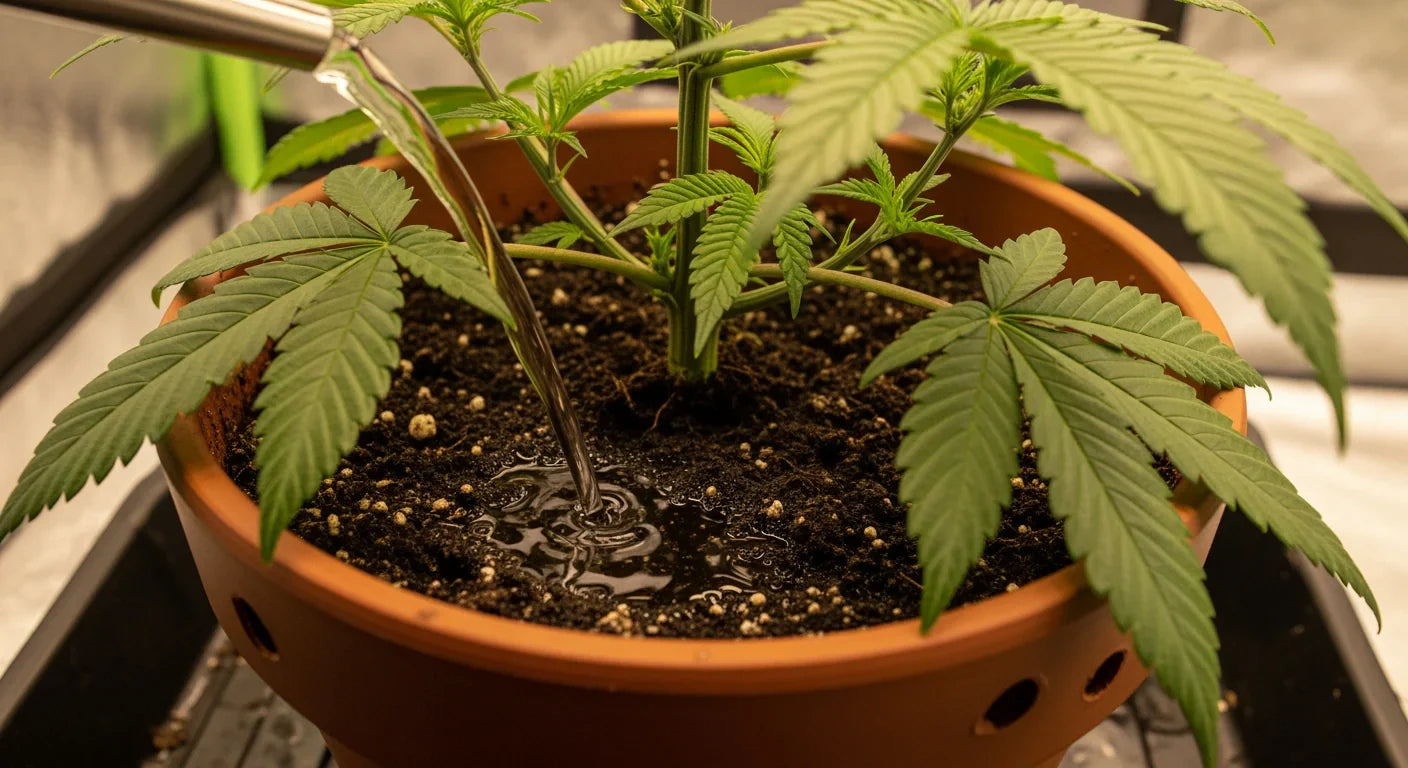
Drainage holes are a must. Water that collects in the saucer should be removed.
Tip 4: Take substrate structure seriously
Airy substrates with good drainage are more forgiving than heavy, dense soil.
Tip 5: Read the plant, not just isolated symptoms
Always look at leaf position, color, and growth together—not every droopy leaf means the plant is thirsty.
Learning to water cannabis properly means understanding the bigger picture
With more experience, your perspective changes. You don’t water “because it’s time,” but because several signals line up. That’s when routine sets in—not from repetition, but from understanding.
Watering cannabis plants correctly means respecting the interaction between roots, substrate, and the environment. Temperature, humidity, and pot size affect water needs more than many people think.
Larger plants can handle short dry spells better than constantly wet conditions. Letting the substrate dry out a bit between waterings isn’t stress—it’s part of a healthy rhythm.
Growth phase, environment, and how they affect water needs
The plant thrives and gets bigger? At the same time, its tolerance for fluctuations also increases. Still, watering remains a dynamic task. High temperatures, strong air movement, or loose substrate cause it to dry out faster.
The following questions are more helpful than any blanket recommendation. If you want to water cannabis properly, you should regularly check:
- How quickly does the substrate dry out?
- Does the pot weight change noticeably within a day?
- Does the plant visibly respond to watering?
Legal notice about cultivation in Germany
Private cultivation of cannabis is regulated by law in Germany. Rules regarding the number of plants, cultivation location, and use must be followed (as of 2025). This article provides only general knowledge about basic plant cultivation and is not a guide for illegal cultivation. Here you can find all the regulations for the legal situation in Germany.
Summary: Watering cannabis
Watering cannabis properly isn’t a secret, but a basic cultivation skill. What matters are not fixed amounts or rigid schedules, but the interplay between substrate, root space, and environmental conditions. If you understand this interplay, you’ll automatically make fewer mistakes—no matter your setup or experience.
Attention and patience matter more than activity. Intervening too often disrupts root development, while targeted, mindful watering creates stable conditions. This is where simple care turns into real plant understanding.
Whether you start with seeds or cuttings doesn’t change the principle: Water should always be used purposefully, not just out of routine.
If you learn to read the plant, you won’t water more often, but much, much better. Your plants will reward you with better yields. And honestly, it’s just fun to learn, experiment, and succeed in this area.