
Table of contents
- Origin and genetic traits of the Indica plant
- The fascinating effects of Indica varieties
- Pure Indica vs. Indica-dominant: What's the difference?
- Distinction between Indica, Sativa, and Hybrids
- Who are Indica varieties suitable for?
- Strong Indica varieties: Characteristics and potency
- Indica varieties at a glance: Types and categories
- Recognizing quality in seeds and cuttings
- The role of terpenes in Indica strains
- Which Indica strain is right for you?
If you're into cannabis, seeds, and cultivation, you can't miss Indica varieties. They're among the absolute basics and at the same time some of the most fascinating genetics out there. So let's skip the preamble and dive right into the origins, effects, and special features of these characterful plants, so you know exactly what really matters with Indica.
Indica is a special subspecies of cannabis. Over decades, it has built up a loyal fan base. Indica cannabis varieties stand out with very specific traits that clearly set them apart from their Sativa relatives.
By the way: The term "Indica" originally refers to a botanical classification. While Sativa plants are often associated with energy and mental stimulation, Cannabis Indica varieties are considered the calm anchors of the plant world. Over thousands of years, they've adapted to specific climate conditions and developed a unique biology.
For enthusiasts, understanding these differences is essential to make the right choice when selecting high-quality seeds or cuttings.
The popularity of these varieties is mainly based on their reliability. In a world that's getting faster and faster, Indica varieties offer a counterbalance. You can spot the difference from Sativa or hybrids both in their appearance and in the complex interplay of cannabinoids and terpenes. While hybrids try to combine the best of both worlds, pure Indica varieties stand for an authentic, deep experience that has been valued for generations.
Origin and genetic traits of the Indica plant
The genetic roots of Indica varieties are mainly found in the rugged mountain regions of Central Asia, especially the Hindu Kush mountains stretching across Afghanistan, Pakistan, and northern India. This origin has massively shaped the appearance of the plants. To protect themselves from cold winds and intense UV radiation at high altitudes, they've developed a compact, robust growth form. Unlike the tall-growing Sativas, Indicas stay more squat and bushy, making them especially attractive for many environments.
These morphological differences are visual and reflect the adaptability of the genetics. A typical Indica has a broad leaf structure, often called "fat" leaves.
The color of the leaves is usually a deep, dark green, which points to a high chlorophyll content. In nature, this helped the plant perform photosynthesis efficiently even with fewer hours of sunlight.
Key features of Indica varieties at a glance:
- Growth form: Compact, fir tree-like, and sturdy.
- Leaf structure: Broad, dark green fingers that often look much thicker than Sativa leaves.
- Flowering behavior: Usually, they have a relatively short flowering phase.
- Resin production: They often have a very dense layer of trichomes, making them well-suited for extract production.
- Resilience: Thanks to their origin, they're often less sensitive to temperature fluctuations.
The fascinating effects of Indica varieties
Another main reason why Indica varieties are so popular is their characteristic effect profile. It's often described as a "physical stone" or "body high." Unlike the more head-focused Sativa effect, the Indica experience is usually centered on the body. This makes them the ideal choice for the later hours of the day, when relaxation and regeneration are the focus.
Besides the purely physical effects, there's also a mental component. The effect of Indica varieties is often described as calming, grounding, and almost meditative. It's less about creative highs and more about "arriving" and switching off from everyday stress. Since each variety has its own individual terpene profile, the experience can vary. In the end, it always depends on your own body and individual factors.
The terpene myrcene often plays a key role here. It's responsible for the earthy, almost musky aroma that accompanies many Indica types. Scientifically speaking, these aromatic compounds interact with cannabinoids (like THC and CBD) to shape the overall experience. If you want to understand Indica varieties and their effects, you need to look at the interplay of the plant's entire chemistry, not just focus on a single value.
Pure Indica vs. Indica-dominant: What's the difference?
In modern breeding, it's not so easy to find 100% Indica varieties anymore. Over decades, plants have been crossed to enhance specific traits. Still, they do exist: the classics that contain no Sativa genetics. These pure Indica varieties offer the most original experience and are often the basis for many modern hybrids. They grow extremely stable and predictably, making them especially valuable for purists.
More often these days, you'll come across Indica-dominant hybrids. These plants have an Indica share of, for example, 60%, 70%, or even over 90%. These varieties try to combine the relaxing base of Indica with interesting flavors or a slight boost of euphoria from the Sativa spectrum. Whether you prefer the total calm of a pure genetic or the complexity of a hybrid is a matter of personal preference.
- 100% Indica: Maximum physical relaxation, most compact growth, traditional genetics.
- Indica-dominant: Combines the calm of Indica with subtle nuances from other varieties, often with more complex aroma profiles.
- Indica/Sativa: The perfect balance for those who don't want to choose between physical relaxation and mental clarity.
Distinction between Indica, Sativa, and Hybrids
The distinction between Indica and Sativa is mainly a simplified model for easier understanding these days. Originally, it was based purely on botanical features like leaf width or plant height, but now it's much more about describing the expected effects.
| Characteristic | Indica | Sativa |
|---|---|---|
| Growth form | Compact, bushy, small | Tall, slender, spreading |
| Leaves | Broad and dark green | Narrow and light green |
| Flowering time | Short (approx. 8–9 weeks) | Long (approx. 10–14 weeks) |
| Effect | Physically relaxing (“Stone”) | Mentally stimulating (“High”) |
| Flower structure | Dense, compact, heavy | Airy, elongated |
Indica-dominant varieties are often associated with deep physical relaxation, while Sativa-dominant types are described as more stimulating and mentally activating.
Hybrids bridge the gap: they combine traits from both sides and can have very different profiles depending on breeding goals.
Who are Indica varieties suitable for?
Indica for beginners
Because of their growth characteristics, many are considered ideal for beginners. Their robustness and the fact that they usually take up less vertical space than Sativas make them very easy to handle.
It also helps beginners that the "nature" of these plants forgives minor care mistakes. If you're working with high-quality genetics for the first time, Indica-dominant varieties are often a reliable partner for stable results.
Indica for experienced growers
Experienced users and passionate collectors often—and as many say, gladly—choose Indica genetics. That's simply because they're true classics. The combination of straightforward handling and distinctive character makes them just as interesting for advanced users as for beginners.
Especially experienced growers appreciate the genetic stability, for example when selecting and caring for mother plants. Indica-dominant genetics often react more robustly to stress factors and show predictable growth. This is a real advantage when you want consistent results over several generations. Choosing an Indica variety is always a decision for reliability, stability, and a clearly defined profile.
Strong Indica varieties: Characteristics and potency
When we talk about strong Indica varieties, we usually mean plants with a particularly high content of phytocannabinoids and an intense terpene profile. The potency of a variety doesn't just depend on the THC value, but on the so-called “entourage effect”—the interplay of all components. The best Indica varieties stand out for a thick resin layer that often gives off a heavy, sweet, or earthy aroma.
A high THC content is standard in many modern breeds, but true quality shows in the stability of the genetics. A strong variety should not only be intense, but also retain its characteristics over generations. Collectors pay special attention to the origin and lab-tested quality of the parent plants to make sure the promised strength is truly anchored in the genetics.
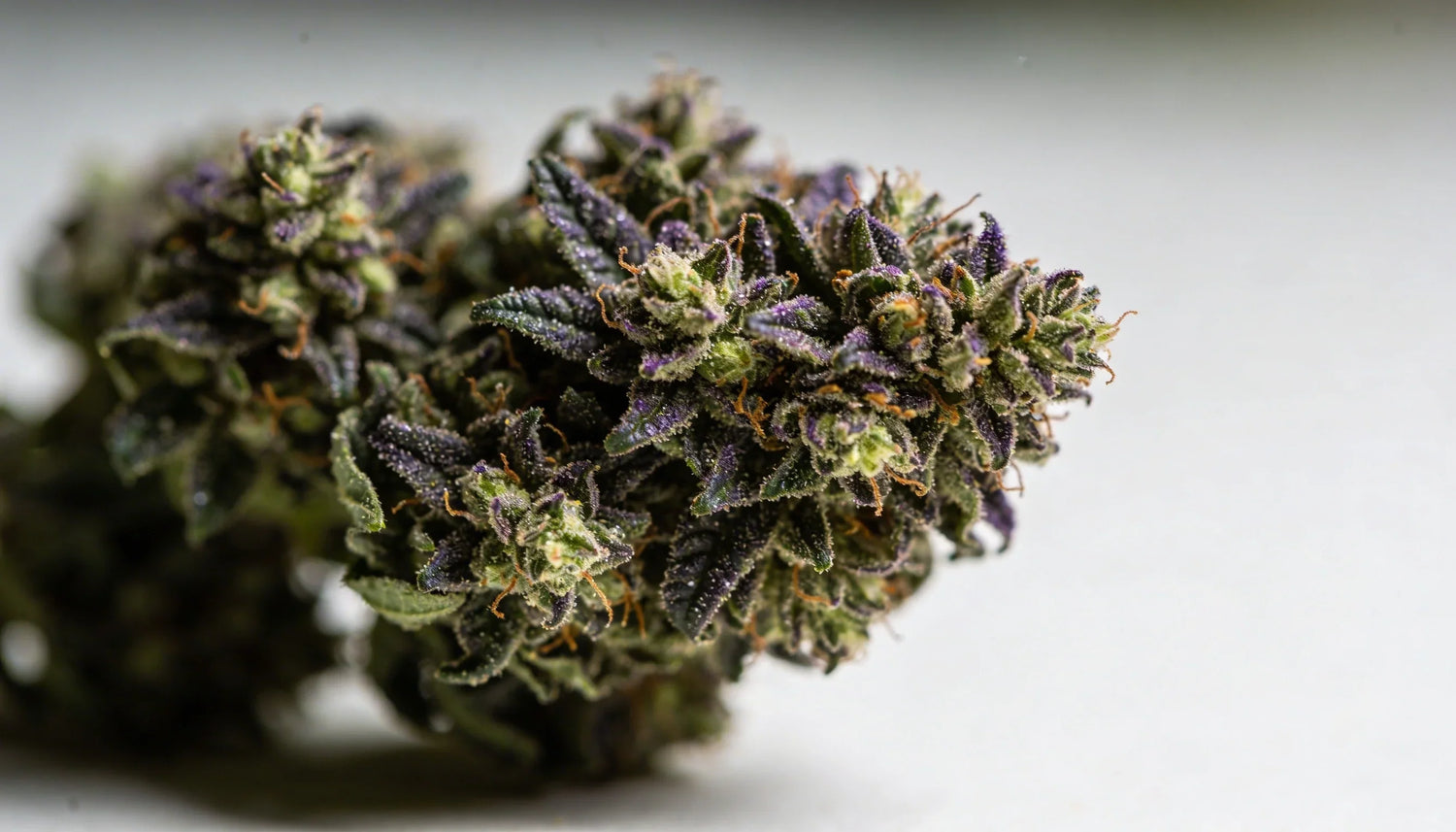
Interestingly, the strength of an Indica often correlates with its density. The flowers (buds) are usually dense, compact, and heavy. This is a direct result of genetics designed to store moisture efficiently and protect against external influences. If you're looking for the best Indica varieties, don't just focus on the raw numbers. The structure and aroma of the genetics are just as important.
Indica varieties at a glance: Types and categories
If you take a look at an Indica strain list, you'll quickly notice there are different ways to categorize these plants. Besides pure genetics, things like seed type or cuttings also play a key role in your choice.
Here you need to decide between autoflowering and photoperiod varieties. While photoperiod plants give you more control over the growth phases, autoflowers impress with their independence from the light cycle. Within the Indica cannabis strains, you'll find the right options for both preferences.
- Photoperiod seeds: The classic, where flowering is controlled by the light cycle.
- Feminized strains: Make sure you get almost exclusively female plants, which makes selection easier.
- Autoflowering strains: These plants start flowering regardless of the light cycle and often contain Indica genetics for a compact, fast development.
- Indica-dominant hybrids: A wide range of crosses for individual preferences.
Recognizing quality in seeds and cuttings
The foundation of every successful cultivation is the quality of your starting material. Whether seeds or cuttings: stable genetics are essential. High-quality Indica cannabis strains can also be recognized by careful selection and tested batches. Reputable suppliers like us at Guardians of Genetics invest a lot of time in research and development to make sure the plants show exactly the characteristics they're known for.
Storage also plays a central role. Seeds are living material and only keep their ability to germinate at the right temperature and humidity. If you buy from a specialized dealer, you benefit from their expertise in maintaining this quality. Transparent information about parent plants and breeding history are further signs of high-quality genetics.
- Transparency: Are there clear details about origin and parent plants?
- Lab testing: Is the quality checked regularly?
- Experience: Does the supplier have solid expertise in cannabis genetics?
- Storage: Are the seeds stored professionally to preserve their vitality?
- Stability: Have the genetics been tested over several generations?
The role of terpenes in Indica strains
The effects of Indica strains are often reduced to just THC or CBD. But for connoisseurs, terpenes are just as important. They decide whether a strain smells like berries, pine, or earth and shape the entire profile. Especially with strong Indica strains, you often find complex, multi-layered terpene combinations.
Linalool, for example, stands for floral, soft notes, while beta-caryophyllene brings spicy accents. Many people choose their Cannabis Indica strains specifically by the terpene profile to find a certain aromatic direction—far beyond just the label "Indica."
Terpenes also play a role visually: certain profiles often come with intense resin production. This "bag appeal" is a clear sign of quality for collectors and shows how closely genetics and expression are linked.
Which Indica strain is right for you?
The world of Indica strains is diverse. From the classic Indica strain for lovers of traditional genetics to modern, strong Indica strains for experienced connoisseurs, this segment offers plenty of options. What matters most for your choice is your personal goal: Are you looking for
- compact growth,
- certain aromas
- or a clearly defined genetic profile?
Indica plants remain a firm part of cannabis culture thanks to their compactness and characteristic traits. But above all, the quality of the genetics always comes first. Only a stable foundation gives you reliable results.
Want to discover suitable genetics for your collection? Then check out specialized categories for Indica, Indica-dominant strains, or hybrids to make the right choice. We focus on solid breeding and transparent origins. These are key features of high-quality Cannabis Indica strains.