
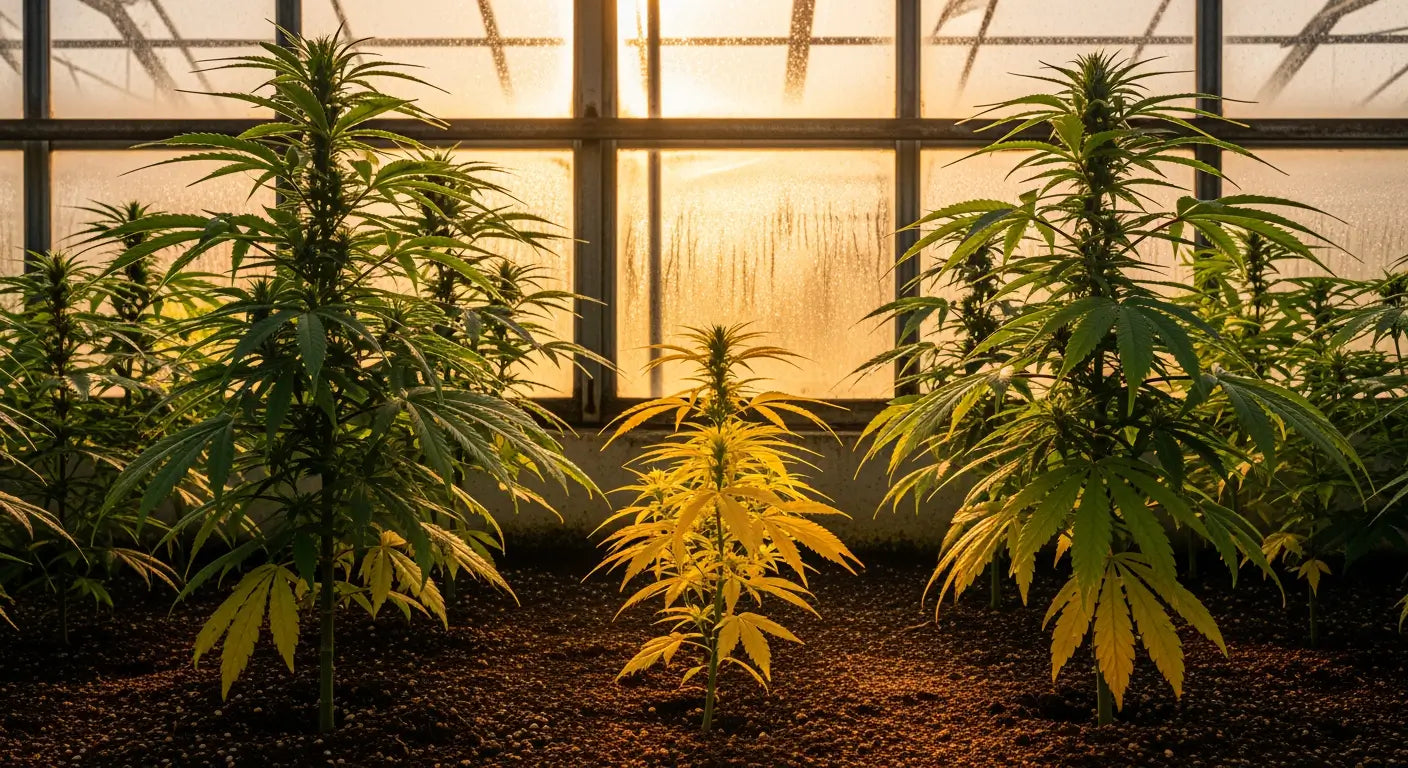
An essay about the underestimated core of professional cannabis production
There’s a persistent myth in cannabis cultivation that’s been passed down for decades. If you have the right lamp and mix the optimal fertilizer, you can get the maximum out of any plant. The reality is different. Anyone who seriously deals with modern plant science or the production of medicinal cannabis quickly realizes that the decisive foundation doesn’t lie in the equipment, but in the genetic makeup of a variety. Genetics form the base on which everything else is built. It determines the potential with which a plant enters the competition of nature.
This connection can be observed surprisingly clearly in scientific practice. Breeders often say that genetics define more than eighty percent of the final result. This doesn’t just mean the active compound content, but the entire performance of a plant. Its growth dynamics, aroma, resistance to mold and stress, yield potential, length of the flowering cycle, stability under changing conditions, and how it reacts to drought, heat, or nutrient fluctuations—all of this comes from a genetic blueprint that’s more precise and strict than some might like to believe.
The environment—light, climate, and nutrient supply—mainly influences how this potential is expressed. It decides whether a plant fully uses its genetic possibilities or falls short. But the environment can never bring out traits that aren’t already anchored in the genetic code. A variety whose genetics are only set up for moderate terpene production will never develop an intense, complex aroma, even under perfect conditions. A plant whose genetic material only allows for a limited active compound content won’t suddenly become a high-performance specimen just because it’s fertilized optimally. And a line that reacts sensitively to stress will remain vulnerable, no matter how carefully it’s cared for.
This insight can also be seen in other areas of agricultural science. The wine industry has been saying for decades that even the best soil can’t produce top quality if the vine is genetically inferior. It’s the same with tomatoes, grapes, or olives. Genetics set the level of quality that can be reached. The environment only determines whether this level is achieved. This principle has long been part of major research programs
especially here in Switzerland, but also in Canada, Israel, or the USA, where cannabis breeding is scientifically supported and extensively documented. The results are clear: genetics are the capital from which everything else is derived.
It gets interesting when you look at the difference between seeds and cuttings. Growing from seeds is basically playing a kind of genetic lottery. Even in stabilized lines, slight variations appear—so-called phenotypes—that can behave differently. Sometimes a plant grows more compact, sometimes more aromatic, sometimes a bit more potent, even though it comes from the same batch of seeds. In a professional setting, this variation is a problem because it prevents consistency and makes harvest processes hard to plan. Cuttings, on the other hand, are genetic copies of a previously selected elite plant. They guarantee that every new generation has exactly the same traits as the mother they came from. For medicinal producers who need to ensure consistent effects, this reliability is indispensable. But even for demanding hobby gardeners or commercial growers, it creates a level of quality assurance that’s hard to achieve with seeds.
But maybe the most important insight is another one. Good conditions can never compensate for weak genetics, while poor conditions can slow down strong genetics, but not completely devalue them. A genetically outstanding variety will deliver respectable results even under less than ideal circumstances and its characteristic traits will still be clearly recognizable. A genetically mediocre line, on the other hand, will remain disappointing even if you do everything right. That’s one of the reasons why experienced growers invest enormous time in selecting and testing their starting plants. They know that the decision for or against a certain genetic line can determine the success or failure of an entire cultivation cycle.
Modern cannabis breeding is now a highly developed field of research. Professional operations like us at TB Farming AG in Switzerland study terpene profiles, cannabinoid distributions, and stress responses using methods that are also common in classical agriculture or pharmaceutical plant production. Time and again, it becomes clear how complex and finely orchestrated the genetic foundation of a plant is. It determines how efficiently photosynthesis is carried out, how quickly roots regenerate, how robust the cell structure is, or how intensely certain aroma components develop. These mechanisms can’t be optimized afterwards in a plant. You have to have them from the start.
Genetics also play a decisive role for consumers, even if they’re often not aware of it. The scent, the taste, the effect, the depth of a variety—all of that starts at the genetic level. A strain like Zkittles has its characteristic,
sweet, fruity aroma profile not because it was “well grown,” but because it’s genetically programmed that way. Cultivation only ensures that this program is read out optimally.
When you put all these aspects together, a clear picture emerges. If you cultivate cannabis, you’re really working with a living blueprint that determines the course of the entire project. The choice of genetics is the most important, but also the most demanding step in the whole production. Better lamps and better fertilizer can improve the result, but they can’t fundamentally change it. Only genetics have the power to set the upper limit of a plant. And that’s exactly why genetics determine over eighty percent of success.