
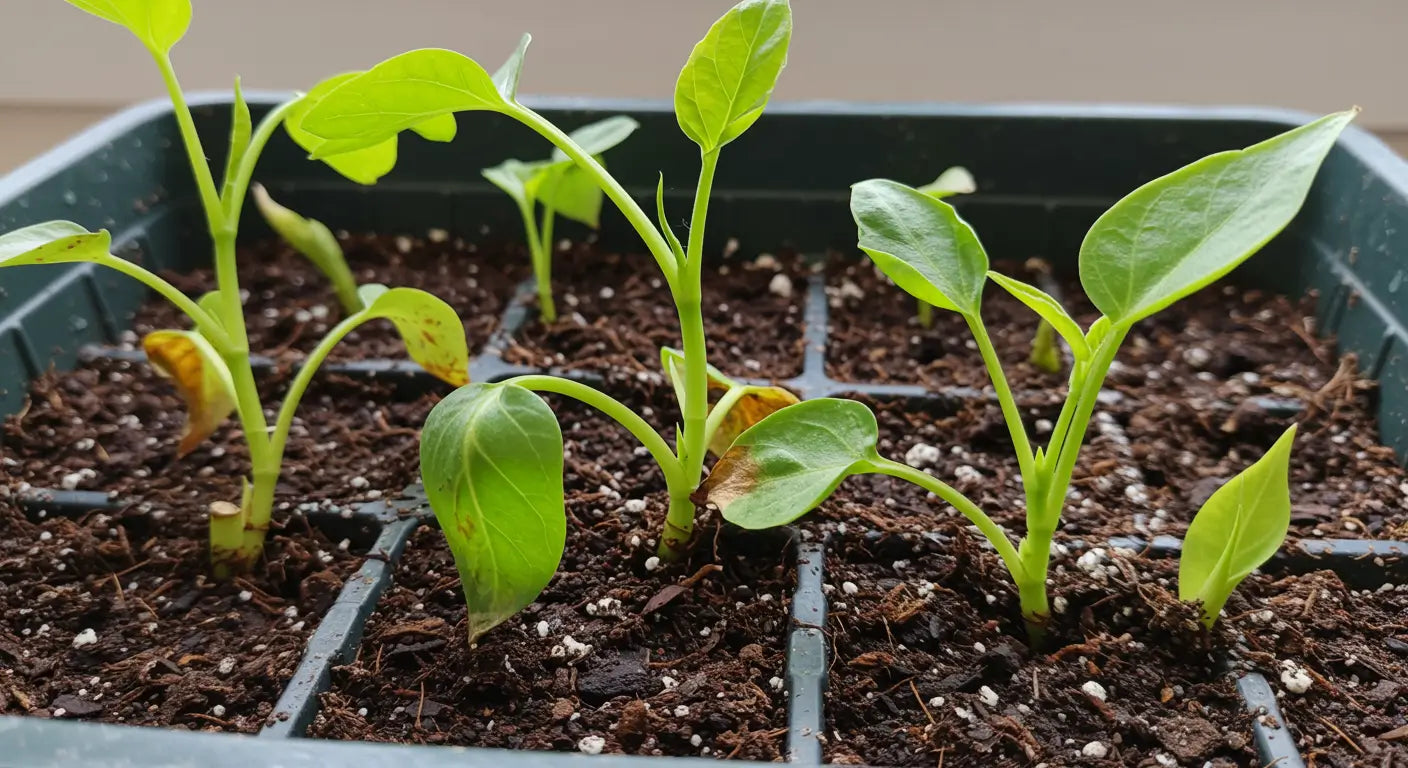
A glimpse into the quiet, delicate world of vegetative propagation
There’s hardly a moment in horticulture that’s as unremarkable yet as meaningful as the instant when a cutting is separated from its mother plant. For many, this process seems simple: a snip, a small shoot, some substrate, a bit of moisture—and life begins. But in truth, the cutting is more vulnerable at this moment than ever before. Its survival depends on a series of precise conditions that are easy to underestimate in their subtlety. Anyone working with cuttings enters a space where the smallest oversight determines whether a modest sprout becomes a vigorous plant, or whether it wilts away within days.
The process begins with the first touch of the tool. A cut that isn’t clean leaves more than just a wound. It changes how the cutting can absorb water, how hormones are distributed, and how the tissue regenerates. A poorly chosen angle, a dull knife, or lack of sterility interferes with a biology that, in these moments, must mobilize all its strength. If you leave the cutting unprotected for too long, you risk it losing more water than it can compensate for during that brief period before it has roots. It’s a process that’s barely visible, but has far-reaching consequences.
But even if the cutting survives this first moment, the next challenge often awaits in the substrate. Many plants don’t fail because they don’t want to grow, but because they’re deprived of the oxygen they so urgently need. A medium that’s too heavy, too much moisture, too little air circulation: the conditions that seem well-intentioned quickly become the reason why young tissue structures rot before the first roots can form.
Cuttings live in a paradoxical state. They need moisture so they don’t dry out, and at the same time they need dryness so they don’t suffocate. If you don’t understand this balance, you’ll lose them before growth can even begin.
Then there’s the atmosphere they’re in. Many underestimate how much light, temperature, and humidity are interconnected. Too much light increases evaporation and forces the cutting to perform in a way that’s simply impossible without roots. Too little light slows down photosynthesis and deprives it of the energy needed for rooting. Warmth can be a blessing or a curse.
A slight increase promotes root growth; too much turns the cutting into a body that can barely save itself from drying out.
Humidity also has two sides. In an environment that’s too damp, droplets form that create ideal conditions for pathogens. In one that’s too dry, the cutting starts to wilt long before it can figure out how to take care of itself.
And then there are the mistakes you only notice later. Impatience is one of the most common. Cuttings are a promise, but one that takes time. Many start fertilizing or intervening too early, with good intentions, but end up disturbing the delicate process of rooting. In vegetative propagation, the crucial things happen out of sight: cells divide, hormones build new pathways, root tips seek direction. If you interfere too often during this phase, you take away the calm the cutting needs to stabilize itself.
Maybe least obvious, but most important, is the condition of the mother plant. A cutting isn’t a new beginning, but a continuation. Its vitality reflects the vitality of the genetics it comes from. If the mother plant was stressed, over-fertilized, or grew in suboptimal conditions, the cutting carries that history within it. Depending on how carefully a mother plant is cared for, it’s decided whether a cutting has a rough start or enters the rooting phase with full strength. In professional operations like ours in Austria, this has long become its own scientific field: the care of elite mother plants that must be kept stable for years.
It’s in this area that you see how deep the understanding of cuttings has become in some specialized companies. In agricultural operations like TB Farming in Switzerland or in our genetics programs at Guardians of Genetics, it’s not just about cutting, rooting, and shipping. It’s about studying, documenting, comparing. Mother plants are kept under controlled conditions to avoid fluctuations in their vitality. Every batch of cuttings doesn’t happen by chance, but comes from a carefully maintained line whose traits have proven themselves over years. It’s the quiet, precise work behind the scenes. The kind hardly anyone sees, but that determines whether a cutting not only takes root, but can realize its full genetic potential.
In the end, the failure of a cutting is rarely dramatic. It’s more of a slow fading that began long before: with the cut, in the substrate, in the climate, in the restlessness of the caretaker, or in the history of its mother. Cuttings are a reflection of their origin and a sensitive instrument of nature. If you understand them,
you realize that their success isn’t a matter of luck, but the result of a precise interplay of biology, patience, and experience. And if you’re aware of this responsibility, you can create structures where every single shoot has the chance to grow into a strong plant. Just as we do in our operations, where we dedicate ourselves to genetics and their care with scientific consistency.