Table of contents
- The benefits of fimming
- Who is fimming for – and who should skip it?
- The right time for fimming
- Step-by-step guide: How to fim properly
- How to fim simply and safely
- Fimming vs. topping – a quick comparison
- A few facts about fimming
- Common mistakes with fimming
- Conclusion: Is fimming really worth it?
Can you really boost your harvest just by using the right pruning technique? Sounds almost too simple, but it can actually make a real difference. Fimming is one of those techniques. You don't need any special equipment, no high-end setup, no grow-guru knowledge. You start with the cutting, make a precise cut at the right time, and the plant responds with more shoots, more structure, and, ideally, a bigger yield.
Many growers use fimming to get more growth points from a single plant without stressing it unnecessarily. Others skip the technique because it's often done wrong or misunderstood. That's exactly why it's worth taking a closer look at fimming and knowing when it makes sense and how to do it right.
The benefits of fimming
Basically, fimming has a clear goal:
The plant's growth hormones are redistributed. Instead of all the energy going into one main stem, several equal shoots develop, which later become potential yield sites.
The result isn't an instant higher yield, but a better structure that uses light, air, and nutrients more efficiently.
Typical benefits of fimming:
- More main shoots instead of just one dominant top
- Bushier, more even growth
- Better light distribution across the whole plant
- More compact height – ideal when space is limited
- Potentially higher overall yield
Important: Fimming is no substitute for good conditions. Without enough light, healthy roots, and steady care, the effect stays limited.
Who is fimming for – and who should skip it?
Fimming is especially interesting for growers who want to:
- Get more out of fewer plants
- Control plant height
- Already have some experience with pruning techniques
Fimming is less suitable for:
- Very young or weak plants
- Stressed plants (for example, after repotting or nutrient issues)
- Growers who want to interfere as little as possible
Basic rule: Only fim strong, healthy plants. Anything else will cost you more yield than it brings.
The right time for fimming
Timing is key with fimming. If you cut too early, you slow down growth because the plant doesn't yet have the strength to support several new shoots at once. If you cut too late, the effect fizzles out, since the main stem has already established its dominance and the plant barely responds with branching.
The ideal time is when the plant has at least 4–6 nodes, is clearly in the vegetative phase, and the main stem is active and stable. At this stage, the plant produces enough growth hormones to not only handle the cut, but to redirect energy into new growth points.
Focus less on strict numbers and more on the overall picture. A plant that's clearly "thriving," growing daily, has a strong leaf color, and shows tension in the leaves is ready. If that's the case, the window for fimming is open. If you're patient and catch the right moment, fimming won't slow things down—it'll actually boost growth.
- The plant has at least 4–6 nodes
- It's clearly in the vegetative phase
- The main stem is growing actively and steadily
Step-by-step guide: How to fim properly
Fimming is quick to do. The key is knowing where and how to cut. With these steps, you'll make a clean FIM cut without stressing the plant unnecessarily.
1. Use clean tools
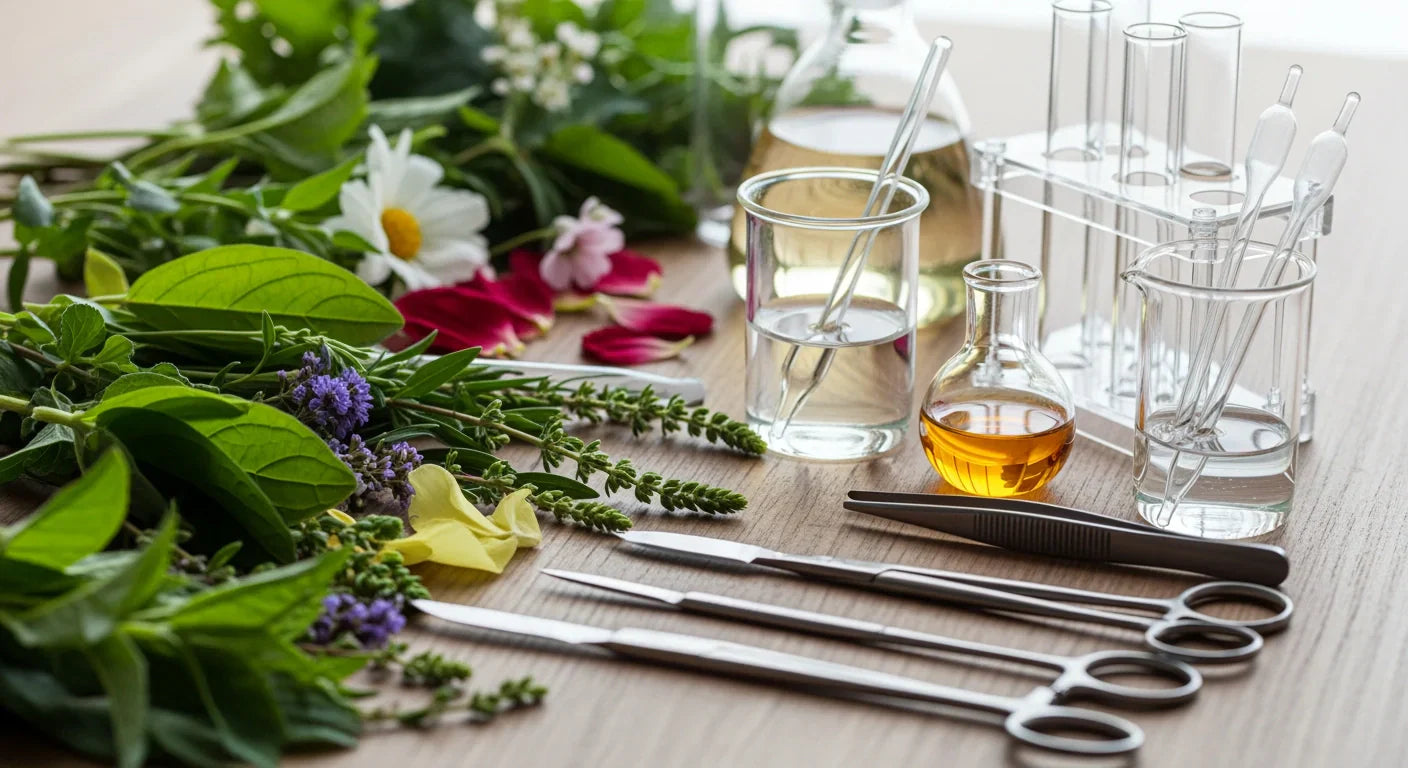
Use sharp scissors or a blade. Cleanliness is a must—any infection or crushing wastes energy.
2. Locate the growth tip
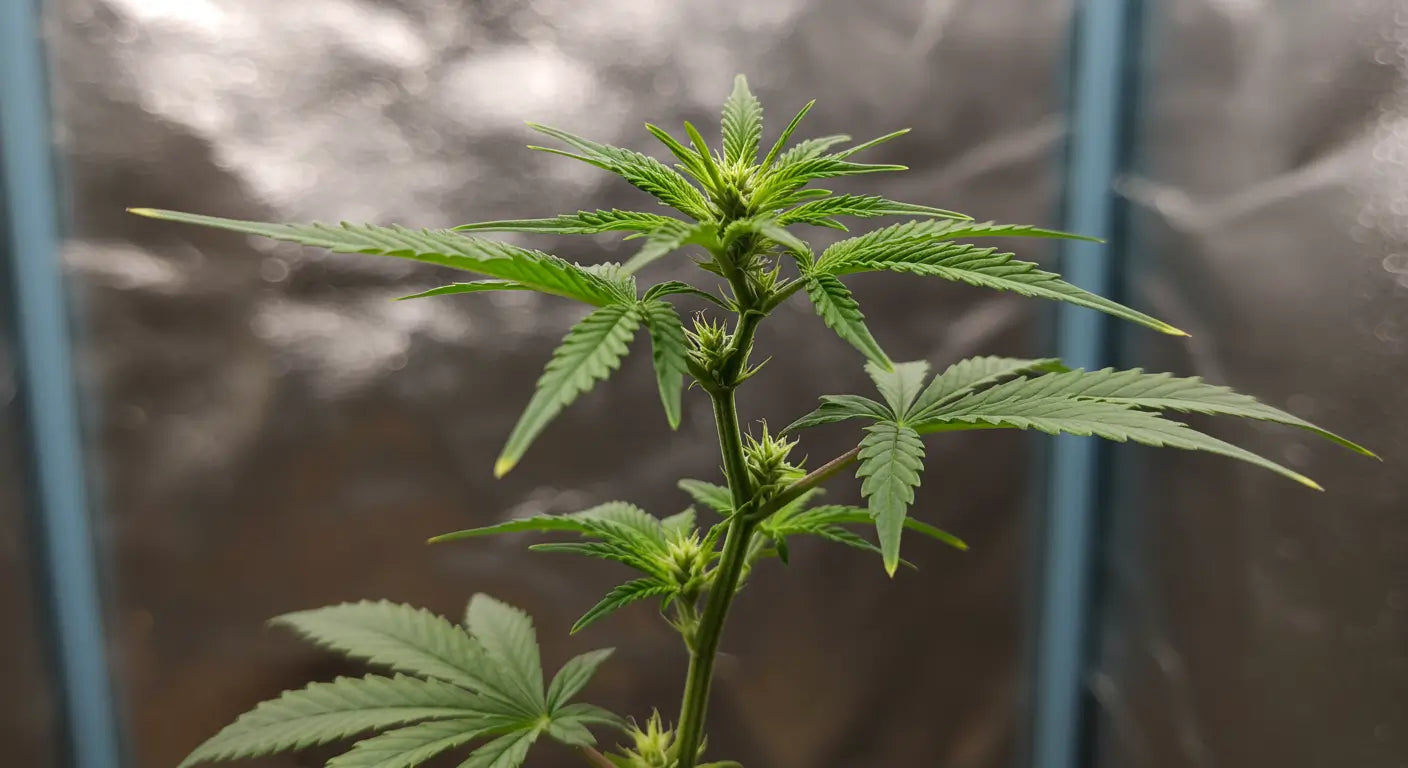
Cut the very top shoot, where new leaves and shoots are forming.
3. The crucial cut
Here's the core of fimming: You remove only about 70–80% of the tip—not the whole shoot.
- Don't cut too deep
- Leave a bit of the tip standing
This "incomplete cut" is what leads to several new shoots later on.
4. Allow a rest period
After fimming, the plant needs 7–10 days to reorganize itself. Don't add extra stress during this time.
How to fim simply and safely
A lot of beginners make the mistake of trying to optimize things right after fimming. That's rarely helpful. The plant will handle the rest—if you let it. If you want to keep it simple, remember: less is more.
- Only one fimming spot per plant
- No more pruning after that
- No experiments with fertilizer or light right after cutting
- Keep conditions steady
Fimming vs. topping – a quick comparison
Both techniques aim for a similar goal, but work differently. Fimming can create more growth points, but it's not guaranteed. If you want maximum control, topping is often the way to go. If you like to experiment, try fimming.
| Category | Topping | Fimming |
|---|---|---|
| Type of cut | Main stem is completely removed | Shoot is only partially removed |
| New shoots | Usually 2 new shoots | Often 3–5 new shoots |
| Control | Very predictable | A bit less predictable |
A few facts about fimming
- Not every variety reacts the same way
- More cuts don't automatically mean more yield
- Too much fimming can slow growth
- Light distribution is key to success
- Patience matters more than perfection
- Fimming isn't a trick to fix poor conditions. It only boosts what already works well.
Common mistakes with fimming
The most common problems with fimming come from bad timing and sloppy technique. Especially cutting too early slows down growth, because the plant doesn't yet have the strength to handle the cut properly. Just as critical is cutting too deep, which accidentally removes the entire shoot—then fimming automatically turns into topping, often without meaning to.
Fimming a single plant multiple times also quickly leads to unnecessary stress and can noticeably slow growth. It's even more problematic to fim plants that are already struggling, for example due to repotting, nutrient issues, or other stress factors. In these cases, the cut usually costs more yield than it brings.
The most important rule of thumb is: Better to cut too little than too much.
Conclusion: Is fimming really worth it?
Fimming can boost yield—if used purposefully. It's not a miracle cure, but it's an effective technique to improve plant structure and create more usable growth points.
In short:
Fimming is ideal for anyone who wants to get more structure and more potential out of healthy plants—without complicated setups or extreme training.
If you do it calmly, cleanly, and at the right time, you'll be rewarded with strong, even growth. And that's what it's all about in the end: not more stress, but more efficiency.