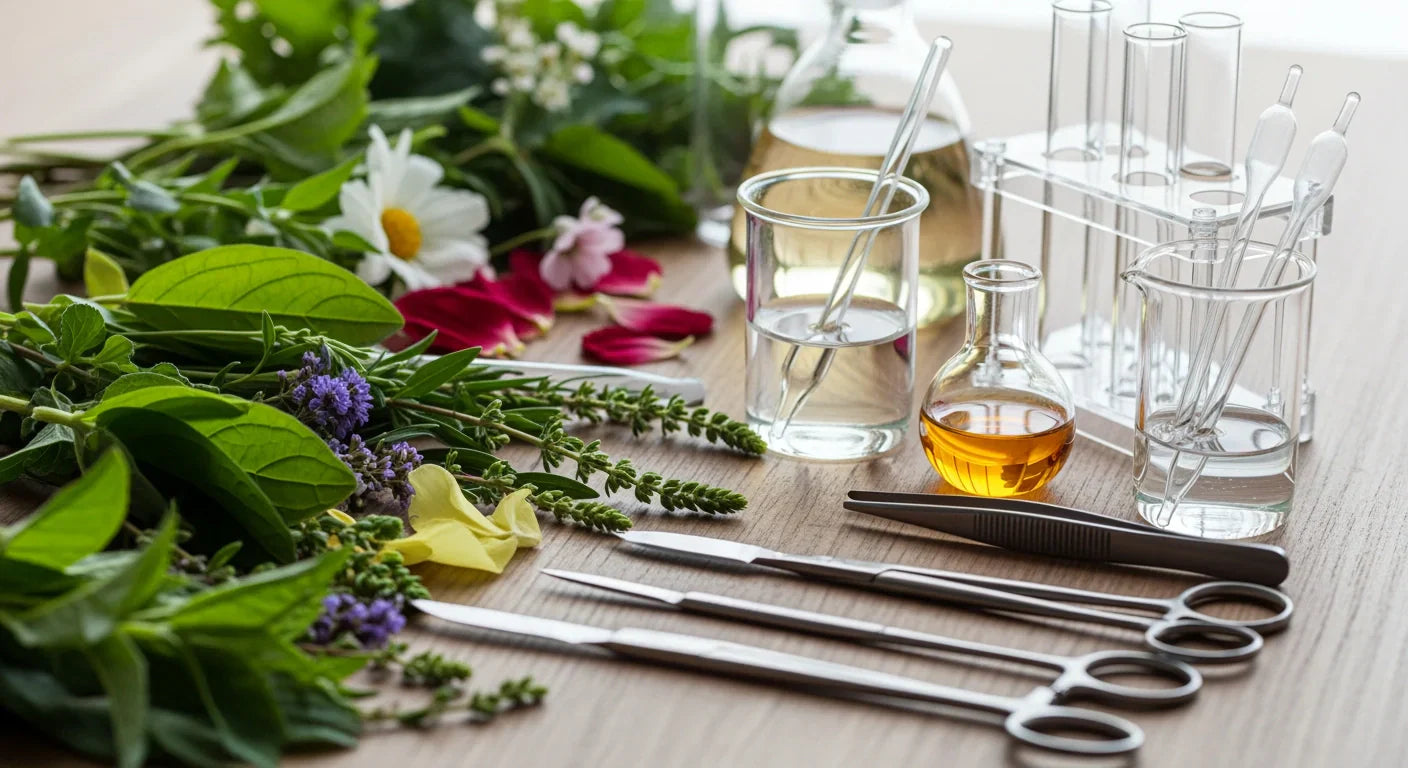

If you want to get the most out of your garden, there's one technique you just can't ignore: Topping. While methods like Fimming rely more on unpredictable shoot multiplication, topping is the precision tool among pruning techniques. It's a deliberate intervention in the plant's biology to shape a strong, multi-stemmed crown from a single main shoot.
Instead of just letting nature take its course, with topping, you take over the plant's architecture. But what actually happens inside the plant?
The biology behind it: Appointing a new "boss"
Plants naturally follow apical dominance. A hormone called auxin, which is produced at the very top, suppresses the growth of the lower side shoots. The plant puts all its energy into growing upwards to catch the most light.
By topping—completely removing the main tip—this hormone flow is suddenly interrupted. The plant senses the loss and immediately redistributes its energy reserves to the side shoots below. The result? Two shoots become two new "main bosses" that grow side by side evenly.
Why topping is a gamechanger:
- Structural balance: Instead of a Christmas tree shape, you get a bushy, wide profile.
- Maximum light yield: A flat canopy ensures all flower clusters get the same light intensity.
- Height control: Perfect for indoor growing with limited ceiling height.
- Mechanical stability: Compact plants are often more resistant to wind damage or bending under their own weight.
When is the plant ready for topping?
Timing is everything with topping. Cutting too early can stunt growth permanently, while cutting too late wastes valuable time during the vegetative phase.
The golden rule: Wait until the 4th to 6th node.
As soon as the cutting has developed so that the plant has at least four fully developed leaf nodes, its root system is stable enough to handle the "shock" of pruning. Make sure the plant looks deep green and vigorous—only a healthy plant can turn the stress of topping into new growth.
Step by step: How to make the perfect cut
Topping is a high-stress training (HST) technique. To make sure it goes well, you should proceed methodically:
-
Hygiene check: Germs are the enemy. Only use a disinfected scalpel or sharp trimming scissors. Crushing injuries from dull tools slow down healing.
-
Find the spot: Look for the topmost developed node. Make the cut about 0.5 to 1 cm above the axils of the two side shoots you want to encourage.
-
The clean cut: Remove the tip with a single, smooth cut. There shouldn't be any of the old terminal bud left (unlike with fimming).
-
Let it rest: After cutting, the plant needs a recovery period of about 7 to 10 days. During this time, it adjusts its hormone balance. Avoid repotting or experimenting with extra fertilizer during this phase.
The limits of pruning techniques
Topping is a powerful tool, but not a cure-all. There are situations where less is more:
- Autoflowering varieties: Because of their fixed life cycle, automatics often don't have enough time to recover from heavy topping. Be careful here.
- Flowering phase: Never top during flowering! Once the plant puts its energy into fruit formation, it has no capacity left for structural changes.
- Weak plants: If the plant shows signs of deficiency or pest infestation, put the scissors away until it's healthy again.
Common mistakes with topping
The most common problems come from cutting too early and not allowing enough recovery time. If a plant is topped before it's built up enough strength, growth will be noticeably delayed. Also, topping multiple times in a short period quickly leads to unnecessary stress. It's especially problematic to top plants already stressed by repotting, nutrient issues, or environmental factors.
A few facts about topping
- Topping is one of the most predictable training methods
- Repeated topping increases stress significantly
- The recovery period is crucial
- Light distribution determines the later benefit
- Topping enhances existing growth, it doesn't create new growth
Planning instead of chance
Topping is the ideal choice for growers who value symmetry and predictability. While fimming often produces more shoots, topping gives you a more stable structure and makes later training (like Scrog) easier to manage.
If you're willing to give your plant the recovery time it needs after cutting, you'll be rewarded with efficient light use and a robust plant structure that forms the foundation for a successful harvest.